
Wendell Rodricks's passion for fashion has its roots in food, he reveals in this heartwarming essay.

Prime Minister Narendra Modi on Monday chaired a high-level meeting to review preparedness for the hot weather condition in the upcoming summer season and called for preparing separate awareness material for different stakeholders like common citizens, medical professionals, local body authorities and disaster response teams.

It may be a little early to cheer the recovery in the fast-moving consumer goods (FMCG) space as a deceleration in discretionary demand, after the festival season, may offset fragile rural recovery, analysts have cautioned. "The overall demand environment for staples remains muted, while discretionary demand trends have seen some deceleration after the festival season. "We believe margins in staples have bottomed out, but we expect only a gradual uptick with the ongoing softening in raw material prices.

Actress Irra Mor generously offers a tonne of tips on looking good.
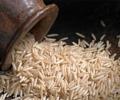
The industry expects Iran to purchase at least 1 million tonnes this financial year

Every week, we bring you fascinating videos, chosen by you, through your likes.

India must be prepared to deal with climate disasters, geopolitical confrontations, and social strife linked to global events, asserts Jayant Sinha, chairman of Parliament's Standing Committee on Finance.

Nine persons were still feared trapped under the debris of the structure which collapsed at 1.45 pm on Saturday at Wardhaman Compound in Valpada area, they said, adding that search and rescue operations were on.

People affected due the flood have taken refuge in safer areas as the administration prepares to shift them to relief camps.

An all party-meeting to discuss legislative business in Parliament's monsoon session on Thursday saw a fierce debate on the issue of Telangana with the Bharatiya Janata Party demanding that a bill be brought on it in this session and some other parties fearing repercussions of the decision in other states.

Irrigation woes have contributed to the problem of stubble burning in the state, reports Sarthak Choudhury.

'I was put in an anda cell. No window, light or air. Only grills.' 'During the monsoon, water would seep. There were rats running around all the time.' 'We were forced to sleep under bright lights all the time. Those bright lights are never switched off.'

During a meeting of parties convened on Sunday ahead of the Monsoon Session of Parliament, Tamil Nadu-based Dravida Munnetra Kazhagam and All India Anna Dravida Munnetra Kazhagam demanded India intervene in the neighbouring country which is facing a debilitating economic crisis.

Floods triggered by the torrential rain since June 14 have wreaked havoc, inundating a vast swathe of flat land in the south and southwest of the country.

'The buildings all around had caved in or were damaged. The trees were all uprooted. Things were very scary.'

India has built up buffers against cyclical difficulties and has ample foreign exchange reserves to withstand pressure on credit worthiness, S&P Global Ratings said on Thursday. Speaking at the India Credit Spotlight 2022 webinar, S&P Sovereign & International Public Finance Ratings director Andrew Wood said the country has a strong external balance sheet and limited external debt, making debt servicing not so expensive. "The country has built up buffers against cyclical difficulties like those, which we are experiencing right now," Wood said.

Indian equity markets had a good run in the first half of calendar year 2023 (CY23), with the S&P BSE Sensex and the National Stock Exchange Nifty50 hitting fresh 52-week highs. While the Sensex scaled up to a peak 64,718, the Nifty50 hit Mt 19,189. As the markets now prepare to enter the second half (H2) of CY23, all eyes are on global central banks, especially the US Federal Reserve, as to when they will pause and pivot as regards their interest-rate cycle.

The limited availability of flexible (flex)-fuel vehicles in the Indian market and the slow rollout of ethanol-blended petrol by oil-marketing companies (OMCs) remain major obstacles to achieving widespread use of biofuels in the transportation sector in India. Recently, two Union ministers have emphasised India's biofuel potential, arguing that it has the capacity and potential to lead a transition towards widespread biofuel adoption. Road Transport Minister Nitin Gadkari signalled that this transition is well underway and urged car manufacturers to quickly adapt and introduce new biofuel-run vehicles, lest the government resort to taxing diesel vehicles.

' Number of school hours per day may be reduced. Sports and other outdoor activities which expose students directly to the sunlight may be appropriately adjusted in the early morning'

Avoid junk food and caffeine as it can dehydrate your hair.

These luscious mushrooms swimming in a silky butter garlic sauce are great as a side dish/nice appetizer/ afternoon snack.

This is not a train for the regular commuter, evident from the number of large sized bags in the overhead bin, observes IAF Veteran Air Commodore Nitin Sathe.

Dismissing the talk about early elections, the Congress said the food security measure is a game changer that will provide right to cheap food grains to 82 crore people.

This year's kharif output may be higher than last year but it will be short of 2007 or 2008 levels.

Most Asian markets ended with gains.

Dr Shreekant Sambrani pays tribute to M S Swaminathan, renowned agricultural scientist and a lifelong crusader against hunger who passed away in Chennai recently.

Modi knows that the BMC elections are critical for his party which has never won a majority in the city's 227 wards.

'They can transition from short to long-duration funds when the yield curve normalises.'
Fast-moving consumer goods (FMCG) sales continued to be lower in June compared to May with urban sales witnessing a steeper decline than rural. Sales of goods from shampoos to biscuits stayed lower due to inflationary pressures on commodities. This pushed consumer companies to continue taking price hikes, thus impacting demand, according to data by Bizom.

'The food security along the coastal region will be severely affected.'
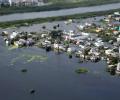
If only you had thought ahead, you would have stocked snacks and biscuits, bread and cake, and vegetables suited for Amma or pondatti to make your favourite bajji and pakoda, observes N Sathiya Moorthy.

Reserve Bank of India (RBI) on Wednesday upped inflation projection for the current fiscal to 6.7 per cent from 5.7 per cent forecast in April. RBI Governor Shaktikanta Das said the upside risk to inflation persists and the recent spike in tomato prices would fuel food inflation. Also, high global crude oil prices would add to the upside pressure on inflation. The upward revision in inflation projection comes as domestic retail inflation has remained above RBI's comfort level of 6 per cent for four months in a row, mainly due to the Russia-Ukraine war which has impacted the prices of commodities across the globe.

Good nutrition, plenty of water and an active lifestyle works wonders for your body.

Storm clouds of a different kind are gathering on the macro-economic horizon and they have nothing to do with surging global crude oil prices. The monsoon has played truant across large parts of India, with western and southern India reeling under the impact of deficient and scanty rainfall
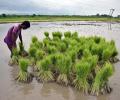
Trade and market players have already started factoring in at least 10 million tonnes drop in production in rice in the kharif season as compared to last year due to delayed sowing.
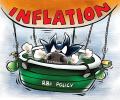
The Consumer Price Index (CPI)-based inflation is now projected to be at 5.3 per cent for 2021-22 with risks evenly balanced. In its August policy, the central bank had estimated inflation to be at 5.7 per cent due to supply side constraints, high crude oil and raw materials cost.

'This committee underscores the Indian State's longstanding conventional approach to leverage top-down conflict management in North East India in general and Manipur in particular.' 'Trying to 'manage' violent conflicts top-down has not worked in the past, and apparently does not seem to work this time either.'

The government is ready for a debate in Parliament on price rise once Finance Minister Nirmala Sitharaman recovers from Covid-19, the Bharatiya Janata Party asserted on Wednesday and targeted Rahul Gandhi, saying he may be "unproductive politically" but should not hurt the legislature's productivity.

Though the lies hardly go beyond extramarital affairs and conception problems, they are laid out by arresting storytellers who raise the stakes while speaking in tongues not wiped clean to make progressive points (No Made in Heaven-type diddling, here), notes Sreehari Nair.

The Reserve Bank of India (RBI) on Wednesday announced to increase the policy repo rate by 50 basis points to 4.9 per cent, the second hike in five weeks aimed at quelling the inflation. The MPC vote was unanimous and has decided to keep stance withdrawal from accommodative, RBI Governor Shaktikanta Das said in a press conference on Wednesday. The decision was taken during a three-day meeting of the RBI's Monetary Policy Committee (MPC) to review the interest rates in the country. The MPC voted unanimously to increase the policy repo rate by 50 bps to 4.90 per cent," Das said.
